Pool Design Considerations for Las Vegas Backyards
Designing a pool for a Las Vegas yard means working within a 600-square-foot limit, setbacks and block walls, and planning around sun, shade and evaporation. Here is what to consider.
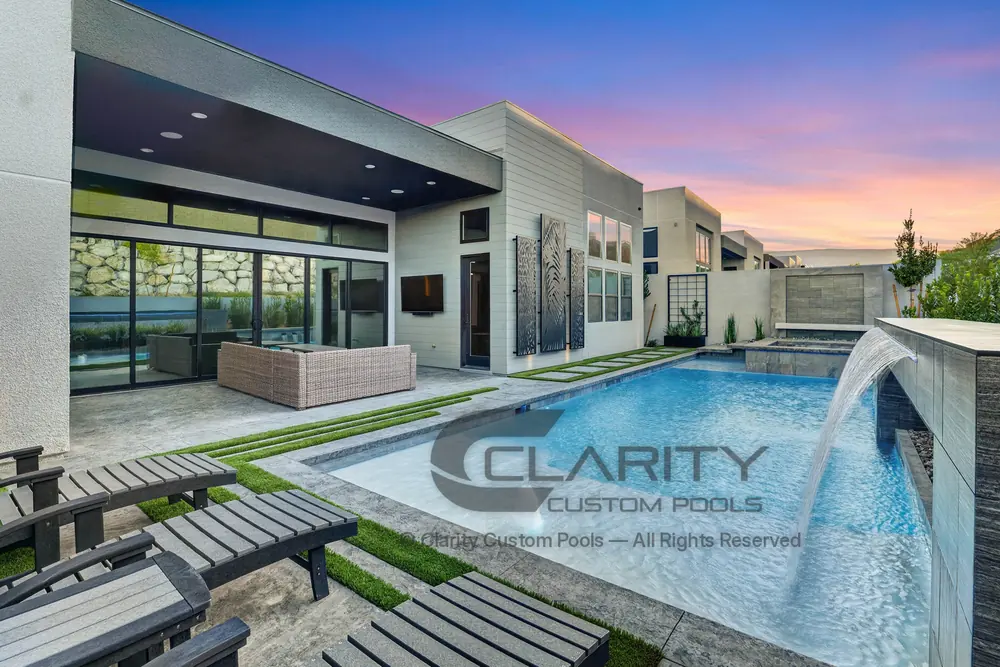
On this page
Designing a pool in the Las Vegas Valley means working within a set of constraints: the size of your yard, walls and setbacks, your HOA’s rules and a regional limit on water surface area. This guide covers those constraints and the design decisions that follow from them.
Start with the constraints
The 600-square-foot limit
The Southern Nevada Water Authority supports a 600-square-foot surface area limit on new residential pools, adopted by the Las Vegas Valley Water District and other local jurisdictions through rule and code changes (SNWA). In the City of Las Vegas, the limit applies to the total combined water surface area of new pools, spas and water features on a single-family parcel (City of Las Vegas advisory). SNWA describes the typical residential pool in Southern Nevada as around 470 square feet. If you want a large pool plus a spa plus a water feature, run the math early. Check with your water provider or building department on how your jurisdiction counts each element.
Setbacks and structures
The Southern Nevada amendments to the 2024 pool code say a pool or spa shall not be placed closer than 60 inches to a building or structure and shall not encroach within public utility easements, with an exception available when a Nevada-licensed structural or civil engineer substantiates that no damage or unsafe condition will result (Southern Nevada ISPSC amendments). The City of Las Vegas asks for structural review when walls, structures or slopes are within five feet of the pool, and requires site-built slides and grottos to be at least five feet from the property line (City of Las Vegas checklist).
HOAs can add their own. Summerlin West, for example, requires the water’s edge to be at least three feet from all property lines and limits tall rock features near property walls (Summerlin West guidelines). Always read your own association’s rules; they differ.
Block walls and access
If your yard is enclosed by block walls, some may be shared with neighbors. The City of Las Vegas checklist asks for structural review of pools with surcharges within five feet of structures or walls, and notes that up to 15 feet of block wall may be removed to build a pool on the same permit. Henderson describes its Property Line Authorization form as a document signed by adjoining owners that grants permission to build a wall or fence straddling the shared line (City of Henderson). Summerlin West prohibits construction access through association or Summerlin Council common walls or property.
Shapes
- Geometric shapes (rectangles, L-shapes, Roman ends) have straight edges and regular lines.
- Freeform shapes use curves and can wrap around existing yard features.
- Lap-oriented designs emphasize length for swimming.
- Plunge or “spool” pools are small pools meant more for cooling off and lounging than for swimming.
Within a surface-area limit, depth is another design tool. Talk with your designer about how you will use each area, such as a shallow lounging area, a play depth or a deeper section.
Spas
If you want a spa, decide early; adding one later can mean new plumbing, electrical work and permits. Choices include a raised spa with a spillover into the pool, a flush spa at pool level, or a detached spa closer to the house. Ask how a raised spa affects the structural design and whether it needs guards or other safety measures; Clark County has a code interpretation on guardrails for elevated spas and walking surfaces (Clark County codes library). Spa surface area counts toward the combined limit in the City of Las Vegas.
Baja shelves and sun shelves
A shallow tanning ledge, often called a Baja shelf, gives a place to sit in a few inches of water with an umbrella or lounger. Plan for:
- Shade. Consider where afternoon sun falls on the shelf in summer, and whether you want umbrella sleeves set into the shelf floor.
- Depth transitions that are clearly visible.
Water features
Sheer descents, scuppers, bubblers on a shelf, deck jets and spillways add sound and motion. Two local considerations:
- Evaporation. SNWA advises that wind exposure can increase evaporation in uncovered pools. Ask your builder how a feature’s design and run schedule affect water use.
- Water rules. SNWA’s restrictions state that single-family residences can have fountains and water features with a surface area of less than 10 square feet (SNWA laws and ordinances). How a pool-integrated feature is classified is a question to confirm with your builder and water provider. The Southern Nevada amendments also require a means of entry and exit for decorative water features and vanishing-edge catch basins deeper than 24 inches with walls steeper than 45 degrees.
Fire features
Fire bowls and fire-and-water features need a gas supply, and the City of Las Vegas checklist requires the gas line’s size, length, demand and routing on the plans. The City of Las Vegas includes the pool heater and fire features associated with the pool in the pool permit but requires a separate permit for other gas appliances such as fire pits, fire tables and barbecues when not an owner-builder. Follow manufacturer clearances. Ask about wind sensors, which Clark County’s pool permit guide lists for water features (BPG-185).
Lighting
Lighting affects how the yard is used after dark. Ask your designer about light placement, glare toward the house and neighbors, lighting for steps and shelf edges, and how deck and landscape lighting fit together. Pool lighting must be shown on electrical plans signed by the electrical contractor, along with clearance from overhead power lines (City of Las Vegas checklist).
Automatic covers
SNWA says pool covers reduce evaporation, limit windblown debris and conserve energy, and a safety cover listed and labeled to ASTM F1346 is one of the options the Southern Nevada amendments accept when a house wall with doors serves as part of the pool barrier. SNWA says pool covers reduce evaporation by 90 percent. HomeGuide lists automatic covers at $8,000 to $20,000 nationally (HomeGuide).
If an automatic cover is on your list, tell the designer at the start and ask whether the pool shape, spa and water features work with the cover system you are considering.
Designing for sun and shade
| Design choice | What to ask or plan |
|---|---|
| Pool orientation | Where will sun and shade fall on lounging areas in the afternoon? |
| Deck color and material | Test samples in the sun before choosing |
| Shade structures | Plan footings and setbacks early; often a separate trade |
| Trees | SNWA suggests pool-friendly plants that do not drop excessive flowers, leaves or seedpods |
| Wind exposure | SNWA says wind exposure can increase evaporation in uncovered pools, and suggests trees and shrubs as windbreaks |
| Interior color | Confirm the color meets the Munsell gray scale minimum in the Southern Nevada amendments |
SNWA also advises allowing room for trees to reach mature size and leaving adequate space and ventilation around equipment if planting is used to hide it.
Small lots
- Ask your designer how depth can create different zones without adding surface area.
- Consider combining functions, such as a shelf that doubles as a spa entry or a bench along a wall.
- Plan where the equipment pad goes relative to bedroom windows; Summerlin West, for example, allows its design committee to require reasonable noise mitigation for pumps and blowers.
- Plan the barrier. The Southern Nevada amendments set a residential barrier height of at least 60 inches, and where the house wall forms part of the barrier, doors and low windows need listed alarms, a listed safety cover or another approved means of protection.
Frequently asked questions
How big can my pool be in Las Vegas?
SNWA supports a 600-square-foot surface area limit on new residential pools. In the City of Las Vegas it covers the combined area of pools, spas and water features on a single-family lot. Confirm with your jurisdiction.
How close can a pool be to my house?
The Southern Nevada amendments say not closer than 60 inches to a building or structure unless a Nevada-licensed engineer substantiates an exception. HOAs may add property-line setbacks, such as Summerlin West's three feet.
Are automatic covers worth it in Las Vegas?
SNWA says covers reduce evaporation by 90 percent, and a safety cover listed to ASTM F1346 is one of the barrier options in the Southern Nevada amendments. HomeGuide lists automatic covers at $8,000 to $20,000 nationally. Ask your designer early whether your pool shape works with the cover you want.
Can I add a spa later?
It can be possible, but it can mean new plumbing, electrical work and permits. If a spa is likely, ask your builder to price and plan for it now.
Sources
- Southern Nevada Water Authority, "Pools and spas" snwa.com
- Southern Nevada Water Authority, "Understand Laws and Ordinances" snwa.com
- City of Las Vegas Building & Safety, Industry Advisory: Single Family Residential Pools files.lasvegasnevada.gov
- City of Las Vegas Building & Safety, Swimming Pool Checklist files.lasvegasnevada.gov
- Southern Nevada Building Officials, Southern Nevada Amendments to the 2024 ISPSC sawebfilesprod001.blob.core.windows.net
- Summerlin West Community Association, Design Guidelines and Standards (2026) summerlink.com
- Clark County Building, Codes Library clarkcountynv.gov
- Clark County, Swimming Pool/Spa, Water Feature Building Permit Guide (BPG-185) clarkcountynv.gov
- HomeGuide, "How Much Does It Cost to Build a Pool?" homeguide.com
- City of Henderson, Reference - Forms Explained cityofhenderson.com
Related guides
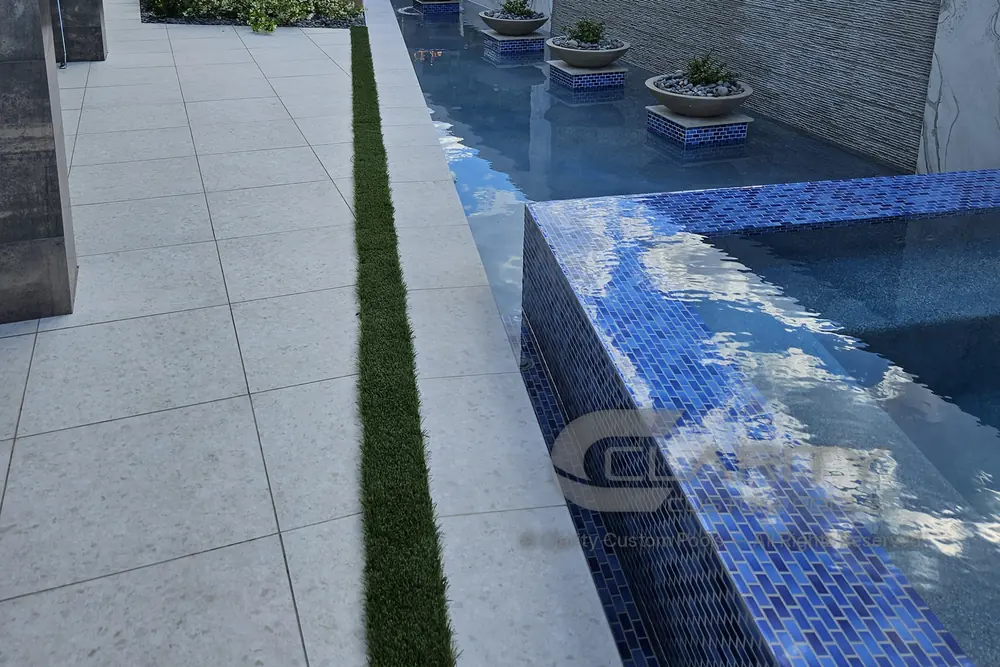
Materials & Finishes
Best Pool Finishes for the Las Vegas Climate
Published cost and life-span estimates for plaster, quartz, pebble and tile, plus what to ask about coping, decking, start-up and hard water in Southern Nevada.
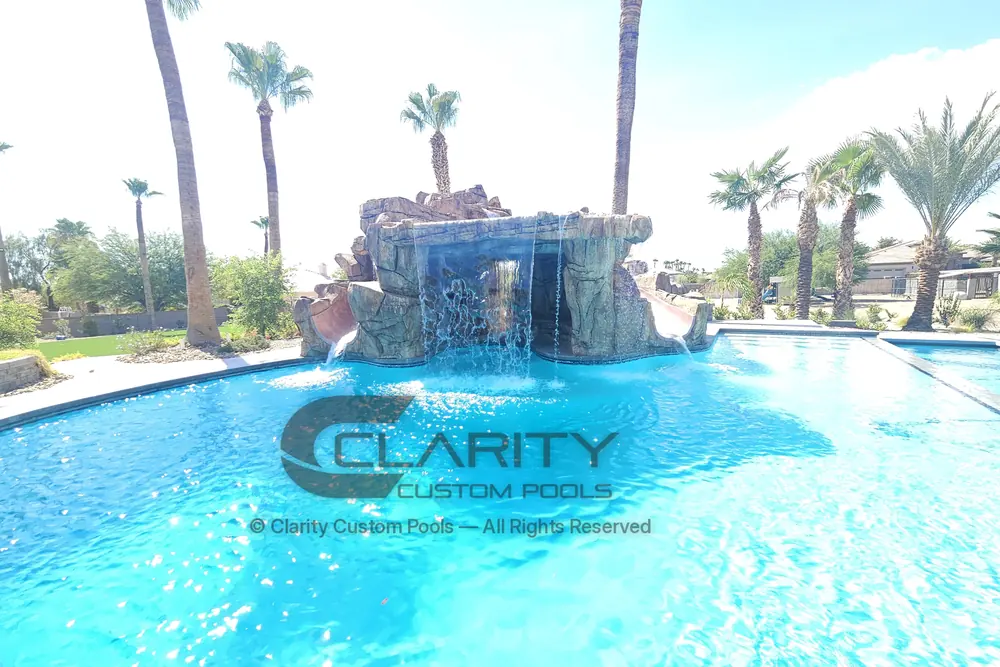
Building a Pool
Pool Permits and Approvals in Southern Nevada
A residential pool in the Las Vegas Valley can involve a building department, a water agency, an HOA and the state contractors board. Here is who approves what, with links to each official source.
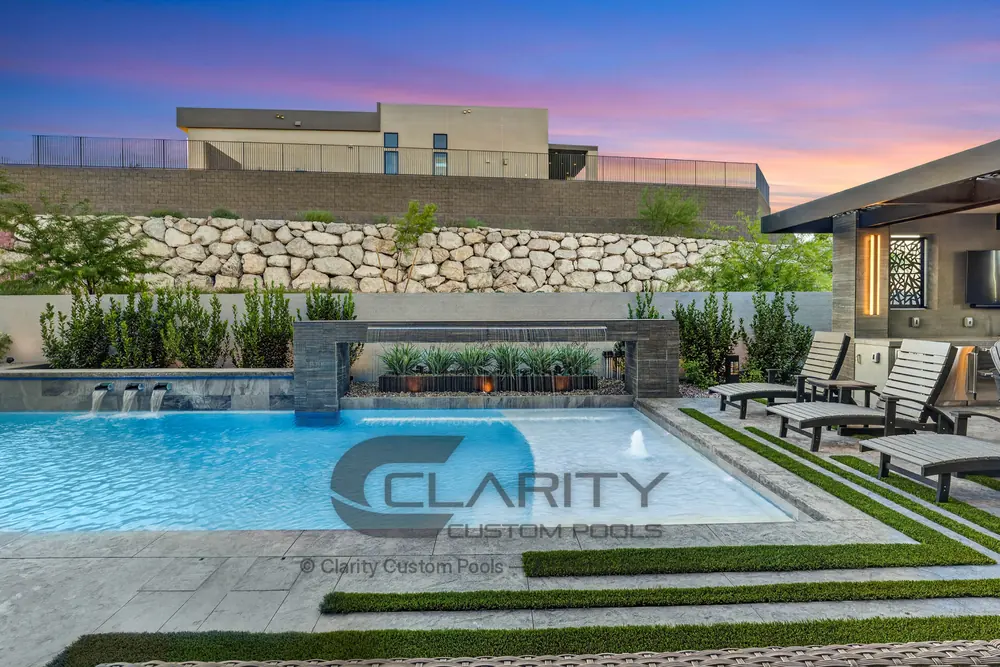
Equipment
Pool Equipment Explained
What each piece on the equipment pad does, how the choices differ, and what hard water, heat and local drainage rules mean for pumps, filters, heaters and salt cells in Las Vegas.